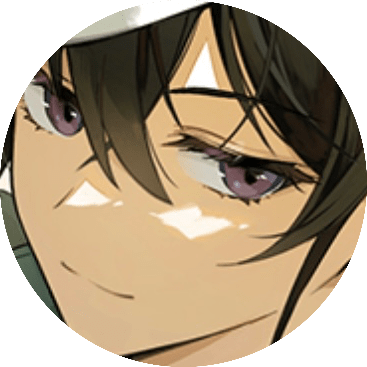
“How much do you think we’d get if we sold this one?”
…What?
[You slowly open your eyes at the sound of a voice coming from somewhere.]
‘What the hell…? Is something blocking my view?’
[You can’t see anything.]
[You try to move your body, but only then do you realize that your hands and feet are tightly bound.]
“They say he’s a drifter from who knows where. Think he’ll fetch a good price?”
“But still, why…”
[Voices unfamiliar to you continue to speak nearby.]
Unfamiliar…?
‘…No.’
They weren’t unfamiliar at all.
In fact, they were so familiar it was uncanny.
‘…They say he’s pretty good-looking.’
“They say he’s pretty good-looking.”
To the point that I could recite the next line before they even said it.
‘He’s got a nice voice, too.’
“He’s got a nice voice, too.”
And if I had picked the ‘warrior’ class, that line would’ve been about how strong I was.
If I had picked ‘mage,’ they’d be talking about my spellcasting.
Of course, I already knew all this.
Because every line they were saying… I’d heard them in the game.
Which means…
[Why did you wake up here?]
‘…No way.’
It meant I was in the game world.
***
“This can’t be happening.”
I froze up, blankly staring after mumbling that one line like I always do when checking messages.
And with good reason.
Unless I was seriously seeing things…
“…That’s the real verification badge.”
The game’s official account had sent me a message.
It felt weird to say it myself, but—I was a pretty well-known gamer.
As a hardcore fan of the globally popular RPG series <Sword of Soul>, I’d shared character builds as a hobby, and they luckily gained love and attention from players at home and abroad.
Sometimes foreign fans would visit my account to leave messages of thanks or support.
[Hello. We saw your builds. We are big fans of yours too.]
But this?
It was the first time the official dev account had ever DMed me.
[All your builds were creative and effective. They also matched the philosophy of our game very well.]
The wording was a bit awkward, probably run through a translator, but it was understandable enough.
[As you know, in the latest installment, <Sword of Soul: The Fallen Star Hero>, the Bard class is not very popular. So we are considering how to make the Bard more appealing in the next update. Many players like and follow your builds. So we want your feedback.]
“…What?”
But after reading what came next, I couldn’t just brush it off.
I left the DM screen and double-checked their profile.
Verified badge, massive follower count—it was definitely the real deal.
“No matter how I look at it, this isn’t a fake…”
And that wasn’t even the end of the message.
The main point was this:
[We will send you the next update build. Please create and test your own Bard build.]
“…So they want me to beta test it?”
I don’t know much about the game development industry… but is this even allowed?
Sure, I’m kind of famous as a build master, but sending a pre-release test build to just a regular user?
To an outsider?
Isn’t that like… a fairness issue?
Or even potentially illegal?
Like, breach of confidentiality or something?
So I cautiously asked.
[:) It is common. No problem.]
…Common?
Seriously?
Is that even possible?
Maybe this is that infamous “free-spirited” side of the tech industry?
Well, either way, the account seemed legit and they were sending it of their own accord, so… legally, it should be fine, right?
And even if it wasn’t fine…
Honestly, I was just way too curious.
I felt… chosen.
So I couldn’t bring myself to refuse.
Surely, a verified account with over ten million followers wasn’t about to send me a virus.
And even if—worst case scenario—it turned out to be a hack, if someone went to the trouble of hacking an official account just to mess with me, I kind of felt like I had to respect that level of dedication and take the hit.
Of course, all those minor concerns vanished the moment installation was complete.
“…This is the real deal.”
<Sword of Soul: Fallen Star> was actually launching.
The epic background music, the title screen that never fails to stir my heart—everything was exactly how I remembered.
I couldn’t help but smile.
“Bard, huh.”
I stretched out my arms in front of me.
“Perfect timing.”
I hadn’t uploaded a Bard build for this installment yet.
I had a few ideas sketched out in my head, but it kept falling down the priority list compared to the other builds I’d already shared.
“Guess it’s time to sculpt one.”
Crack.
My joints popped as I got to work.
To start, let me briefly explain the Bard class in the <Sword of Soul> series.
Traditionally, the Bard was used as a support role that mainly relied on persuasion in non-combat scenarios and buffing allies during combat.
So, there really wasn’t much to build in terms of character development.
You’d just boost the “Charm” stat, sing songs, and buff your stronger teammates—and that was pretty much all you needed to do.
In short, it wasn’t exactly fun during battles.
And especially in this latest title, <Fallen Star>, which received rave reviews for combining the traditional turn-based system of rolling dice—true to the original TRPG roots of the <SoSo> series—with the real-time action preferred by today’s casual gamers, the combat was more thrilling and dynamic than ever.
Naturally, Bards—who had to either avoid or endure most of that praised combat system—became even less popular.
“That’s how it used to be.”
But my “Bard build” won’t be like that.
I pulled up the character creation screen, grabbed my controller, and started moving the stick.
“Class selection… Bard.”
The Bard was fundamentally designed as a class that avoids combat through skills like [Persuasion] that rely on high “Charm” stats.
But the build I’m about to craft won’t avoid battle.
No—more accurately, it will embrace it.
It’ll preserve the Bard’s ability to sidestep conflict, but in combat, it won’t be a passive support—it’ll be the star of the show.
That said, I had no intention of making a character that only looks like a Bard but fights like something else entirely.
That goes against my entire build philosophy.
Good performance is a given, but I’ll never create a build that doesn’t make sense roleplay-wise.
SoSo’s popularity came from how well it captured the essence of tabletop RPGs—dice, paper, and people.
In simpler terms, it was way better for roleplay than other generic RPGs.
If someone just chased efficiency and performance without caring about character concept… they’d miss out on what makes this game truly fun.
Of course, everyone enjoys games differently, and I’m in no position to judge.
But I wouldn’t play that way.
That philosophy is actually why I became popular.
I offered builds that were both powerful and fun to roleplay.
That’s probably what the developers want from me too, now that they’re letting me test this.
So—
“Stats.”
First, I needed to assign attribute points.
Stats are the skeleton—the core framework—of a build.
Every build begins with how you allocate your base stats.
Strength (STR), Dexterity (DEX), Intelligence (INT), Mentality (MEN), Charm (CHA).
Every character starts with 4 points in each stat and gets 21 skill points to allocate however they like.
Of those, the Bard’s main stat is obviously Charm.
The tooltip even suggested investing a decent amount into Charm, then distributing the rest evenly among the other four stats.
But—
“Alright.”
I wasn’t going to make a safe Bard.
So after finishing my stat distribution, I let out a small chuckle.
STR 04
DEX 04
INT 07
MEN 06
CHA 20
Right from level 1, I dumped everything into Charm.
All the way up to 20—the supposed upper limit for mortals in the game’s lore.
In other words, I was level 1, but in terms of Charm alone, I was already the strongest in the human realm.
After that point, well… it enters divine territory.
The god of Beauty in this world is said to have 30 Charm, so that gives you an idea.
Now that stats were done—
“Next up, traits.”
Time to pick “Traits.”
These are personality or appearance features that impact your stats and other mechanics, enhancing the roleplay experience.
You can pick up to three traits when creating a character.
Out of nearly a hundred available, I chose these two first.
“Attention-Seeker” and “Shut-In Artist.”
Attention-Seeker
You are a validation-craving creature who can only live if constantly showered with attention.
You feel joy and energy when others pay attention to you, but easily fall into depression and negative thoughts when ignored.
Effect
MEN -2 / CHA +2
When in the “Noticed” state by allies/enemies/neutrals, you gain a “Happy” buff.
If not noticed, you receive a “Depressed” debuff.
“Attention-Seeker” was—well, exactly what it sounds like.
You become an annoying person who’s always starving for attention.
That’s why I raised my Mentality stat to 6.
Mentality has a sort of hard floor at 4—drop below that and your character becomes so mentally fragile that even high stats elsewhere can’t save you.
Knowing that, I preemptively added 2 points to compensate for the -2 penalty this trait imposes.
When the “Attention-Seeker” is “happy” from getting attention, you gain advantage on all “Charm” rolls.
For example, if you fail a Persuasion check, you get a do-over, increasing your chance of success.
But if you’re “Depressed,” you’re at a disadvantage on all rolls, not just Charm.
That means even if you succeed, you’ll be forced to reroll—and probably fail.
Because the penalties for being ignored were so steep, this trait was usually dismissed as a joke or just for roleplay flavor.
But—
“I think it might actually be viable.”
If I can just stay in the spotlight, I’ll get a powerful buff almost all the time.
So I figured it was definitely worth trying.
Shut-In Artist
You’re a homebody, far removed from outdoor activity.
The gods gave you a natural talent for art—but not for athleticism.
Effect
STR -2 / DEX -1 / CHA +3
“Shut-In Artist” was a much more straightforward trait.
It increases your Charm—the art-related stat—by 3, in exchange for a combined 3-point penalty to Strength and Dexterity, which represent physical ability.
Basically, you become a fragile, artsy type.
For Bard characters, Strength and Dexterity are relatively less important.
So sacrificing those stats to boost your primary stat, Charm, was a very straightforward and common tradeoff in existing Bard builds.
I had already planned ahead, so choosing those two traits wasn’t particularly difficult.
The key, then, was the final trait.
I had some candidates in mind, but none of them felt quite right.
That’s honestly the reason I’d been putting off uploading a Bard build until now.
Still, I had to choose something—so I scrolled through, wondering what would be the best pick…
“…Huh? What’s this?”
One trait instantly caught my eye.
“Face That Could Ruin a Kingdom…?”
It was definitely a trait I’d never seen before.
I quickly moved the cursor over it to pull up the description.
Face That Could Ruin a Kingdom (傾國之色)
You are a beauty so unparalleled, your looks could bring down nations.
Anyone who sees you will fall head over heels—but just as easily, you’ll become a target of envy, jealousy, and intense obsession.
Effect
CHA +5
All humanoid units—ally, enemy, or neutral—within visual range enter a “Charmed” state.
Oh.
This was probably one of the new traits being added in the next patch.
They did say they were working on ways to make the Bard more appealing—this definitely seemed like a trait designed for that.
I mean, it doesn’t lower any other stats and gives you a whopping +5 Charm?
That alone makes it super appealing.
Honestly, this was what you’d call an OP trait.
Not just OP—crazy OP.
I had a strong feeling the numbers would be nerfed by the time the patch was officially released.
But the part where anyone who sees you—ally or enemy—gets “Charmed” was clearly a double-edged sword.
The devs probably meant to show that the phrase “a beauty who could topple a kingdom” isn’t always a compliment—by building penalties into the “Charmed” status.
Here, “Charmed” works like a type of magic or illusion… basically, it’s like a drug.
Literally, your face becomes addictive.
And once someone’s seen it, they suffer withdrawal symptoms if they don’t see it again.
I’m not exaggerating.
It’s not like occasionally thinking about a cute stranger you passed on the street, or a favorite celebrity.
This is the kind of situation where your sweet, normal neighbor might suddenly snap, show up with a knife, and try to keep you locked in their basement.
If that only affected enemies you’re planning to kill anyway, fine.
But imagine that happening to critical NPCs who must never be harmed—or to your own teammates who are supposed to travel with you long-term…
“…Yeah, that’s a mess.”
This’ll be an adventure filled with both eros and errors—and the latter will vastly outweigh the former.
More accurately, I’ll probably get killed by the “errors” before the “eros” even begins.
Plenty of players had tried to cheese affection-building by relying on “Charmed” instead of genuine bonding through wholesome party interactions—only for their game to suddenly turn into a horror-thriller or battle royale, ending in total chaos and punishment from the devs.
And this trait activates “Charmed” constantly, without my control.
It was definitely a high-risk, high-reward kind of trait.
Still.
One thing was clear: this Face That Could Ruin a Kingdom trait was the final puzzle piece that completed my build.
I finally felt like I’d found the perfect match.
And there has to be some way to mitigate the constant “Charmed” penalty.
Maybe wearing a helmet would work?
Would it need to be a full-face helmet that completely hides your face?
Or would any basic headgear item suffice?
In any case, since this was a test, it made sense that I’d choose this trait just to find out.
And so, after finalizing all three traits—
“Pfft.”
STR 04 (-2)
DEX 04 (-1)
INT 07
MEN 06 (-2)
CHA 20 (+10)
As you can see, this is how things turned out.
A level 1 Bard with a Charm stat of 30—equal to that of the God of Beauty himself—was born.
In this world, people might even call it a divine incarnation of charm.
It felt like I had created a character truly worth roleplaying.
If things go as I planned, this Bard won’t just be a walking jukebox that plays songs in battle.
They’ll be a well-rounded character who buffs allies, controls crowds, and can even deal out one-turn kills.
With just their face and silver tongue, they’ll take on armies, sway kingdoms, and decide the fate of the world—the ultimate “mouth fighter.”
And I don’t mean that as an insult.
In this case, it’s literal—they’ll fight with their words, more specifically with the skill “Verbal Assault.”
“Well, sure, they’ve got a glass body and a fragile mind.”
But since this is a party-based adventure game, the team can make up for those weaknesses.
It might be tough for the character—but hey, it’s just a character in a game.
I’m not the one suffering the side effects… so why should I care?
All that’s left now is to customize the appearance of this “sickly, attention-hungry, silver-tongued, god-tier-pretty Bard” I’ve just built.
It had been a while since I made a build this fun to roleplay, so I figured I’d spend extra time on the appearance to match the concept.
With that mindset, I clicked the appearance customization button—
Wham!
Suddenly, I felt a heavy blow to the back of my head—and my vision spun violently.
***
And when I opened my eyes, I found myself in this situation.
“…You’ve gotta be kidding me.”
There was no doubt about it.
This was the world of <Sword of Soul: Fallen Star>.
And the muffled conversations nearby, the fact that I was tied up and hooded in the back of a wagon—all of this was part of the game’s prologue, which plays immediately after character creation.
Which meant, based on the circumstances, I must’ve become the very character I had just built—The Hero of Calamity.
Assuming, of course, that everything I was feeling right now wasn’t just a vivid nightmare.
In other words, from now on, I’d have to survive in this world… with nothing but this face and this tongue.
 Cliche Novel
considering this is flat out based on dnd, mentality is probably supposed to be wisdom right?
LikeLike
Not every dnd based game follow the traditional stats. I’ve seen some remove dex and change it to Per, some mixed int and wis into something like wil, some flat out removes cha to make it fit more into their game. In this case, mentality makes more sense imo, or maybe willpower.
LikeLike
👀👀👀
LikeLike
👀👀👀
LikeLike